
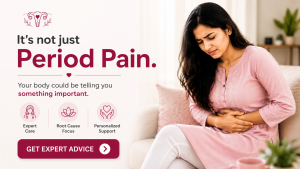
“It’s Just Period Pain.””
Subtitle:
Millions of women take painkillers every month for period cramps—but are you treating the pain or ignoring what your body is trying to say?
If you’ve ever said this while reaching for a painkiller, you’re not alone…
Why Do Menstrual Cramps (period Cramps) Happen ?
Period cramps occur when the uterus contracts to shed its lining during menstruation. These contractions are triggered by hormone-like chemicals called prostaglandins. Higher levels of prostaglandins often lead to stronger contractions, resulting in more intense pain.
Mild discomfort is common, but menstrual cramps that regularly disrupt your daily life aren’t something you should simply “learn to live with”
The Hidden Risk of Frequently Taking Painkillers for Period Pain
Painkillers can provide quick relief from menstrual cramps, but taking them regularly without understanding the reason behind your pain may have drawbacks.
When Menstural Cramps Are More Than “Just Period Pain “
Severe menstrual pain can sometimes be linked to underlying conditions such as:
- PCOS (Polycystic Ovary Syndrome)
- Endometriosis
- Adenomyosis
- Uterine fibroids
- Pelvic infections or hormonal imbalances
If your period pain keeps returning despite medication, your body may be asking for more than temporary relief.
Sings Your Period Cramps Shouldn’t Be Ignored
It’s time to consult a healthcare professional if:
- You miss work, college, or daily activities because of your period cramps.
- Painkillers no longer provide enough relief.
- Your periods are unusually heavy or prolonged.
- You experience pain even when you’re not menstruating.
- Your menstrual pain has become worse over time.
- You feel dizzy, extremely fatigued, or experience severe pelvic pain.
These symptoms deserve proper evaluation rather than repeated self-medication.
Looking Beyond Pain Releif for Healthier Menstural Cycles
Instead of focusing only on stopping the pain, it’s worth exploring what may be contributing to it.
A holistic approach may include:
- Identifying hormonal imbalances.
- Improving nutrition and hydration.
- Managing stress through relaxation techniques.
- Regular physical activity or yoga.
- Adequate sleep and healthy lifestyle habits.
- Personalized care based on your individual health needs.
Many women find that addressing the root cause can reduce the frequency and severity of menstrual cramps over time.
Your Period Shouldn’t Control Your Life
Taking a painkiller occasionally is not the problem. But if you find yourself planning every month around tablets, hot water bags, or cancelled plans, it’s worth asking a deeper question:
What is your body trying to tell you?
Pain is your body’s way of communicating—not something to silence indefinitely.
Understanding the cause of your period pain and seeking appropriate care can help you move from simply managing your symptoms to improving your overall menstrual health.
Final Thoughts On Menstrual Cramps
The next time period cramps strike, don’t just ask, “Which painkiller should I take?”
Ask yourself:
“Why am I experiencing this pain every month?”
Finding the answer could be the first step toward healthier, more comfortable menstrual cycles.
Painkillers have their place, but if you find yourself depending on them every month, it’s worth understanding why the pain keeps returning. Treating the root cause—not just the symptoms—can lead to better long-term menstrual health